Hunger and Health
Our health and nutrition research focuses on the roles that food, community-based interventions, and food bank-healthcare partnerships have on improving outcomes.
Food insecurity and health are intricately linked.
When neighbors have consistent access to nutritious food, they experience meaningful improvements in health, well-being, and stability. Yet too many neighbors and their families continue to face barriers to accessing the food they need to manage and prevent chronic conditions such as diabetes, hypertension, and heart disease - conditions that disproportionately affect the communities food banks serve. Collaboration between community-based organizations and health care - ensuring access to healthy food, nutrition education, and other support services - leads to improved health outcomes, reduced reliance on high-cost care, and stronger, more stable communities.
To learn more about the intersection of food insecurity and health, access research studies, toolkits, evidence reviews, and various spotlight briefs below.
Food as Medicine Reports
A national initiative - funded by Elevance Health Foundation - showing that food bank-health care partnerships improve health outcomes through nutritious food access and whole-person support
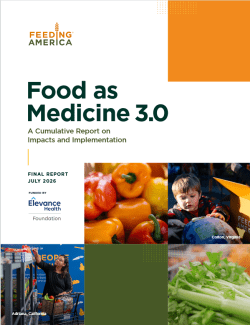
Food as Medicine 3.0 (FAM3) Cumulative Evaluation Report
Food as Medicine 3.0 (FAM3) Initiative Highlights Report
Food as Medicine 3.0 (FAM3) Year 3 Report
Food as Medicine 3.0 (FAM3) Year 2 Report
Food as Medicine 3.0 (FAM3) Year 1 Report
Additional Reports:
Food is Medicine 2.0 - Final Project Report (March 2022)
Food is Medicine 1.0 - Final Project Report (April 2021)